Missing Cost

Goods left the warehouse at zero cost. The margin report looks great. It's wrong.

When an item has no cost at the moment it moves, the movement is booked at nothing: cost of goods sold is understated, margins look better than they are, and inventory value drifts away from reality — quietly, line by line. Otiox's Transaction Ledger flags every event booked without a cost, explains why, and rebuilds its economics once the cost is known.
app.otiox.comFig. 00
Ledger · missing value
Booked at zero cost
Needs cost data before it's right
EventItemCost
Stock out · 8 unitsTrending product$0.00
Stock out · 60 unitsSeasonal item$0.00
Adjustment +Loose component$0.00
COGS understated · margin overstated
Fix

Set the cost, then Rebuild Event Economics — the entry is recalculated from the real cost.

Stock out · 8 units: $240 cost of goods, journal entry ready.

01El Desafío

A missing cost doesn't throw an error. It just makes every report a little wrong.

A product was set up without a cost price, or stock arrived before its receipt was priced. The warehouse ships it anyway — correctly. But the books record each unit leaving at zero. Cost of goods sold comes out too low, gross margin too high, and the inventory valuation no longer matches the shelf. Nobody sees it, because nothing failed.
  1. 01
    Stock moves are booked at zero when the cost isn't there yet
  2. 02
    COGS is understated and margin overstated — with no warning
  3. 03
    Inventory value and the general ledger drift apart
  4. 04
    Fixing it later means hunting through months of movements
02VÉALO EN OTIOX

La misma situación, en el producto.

Pantallas reales del espacio demo de Otiox, paso a paso.
  1. 01

    See the warnings

    The Transaction Ledger summary counts the events that are missing a value.
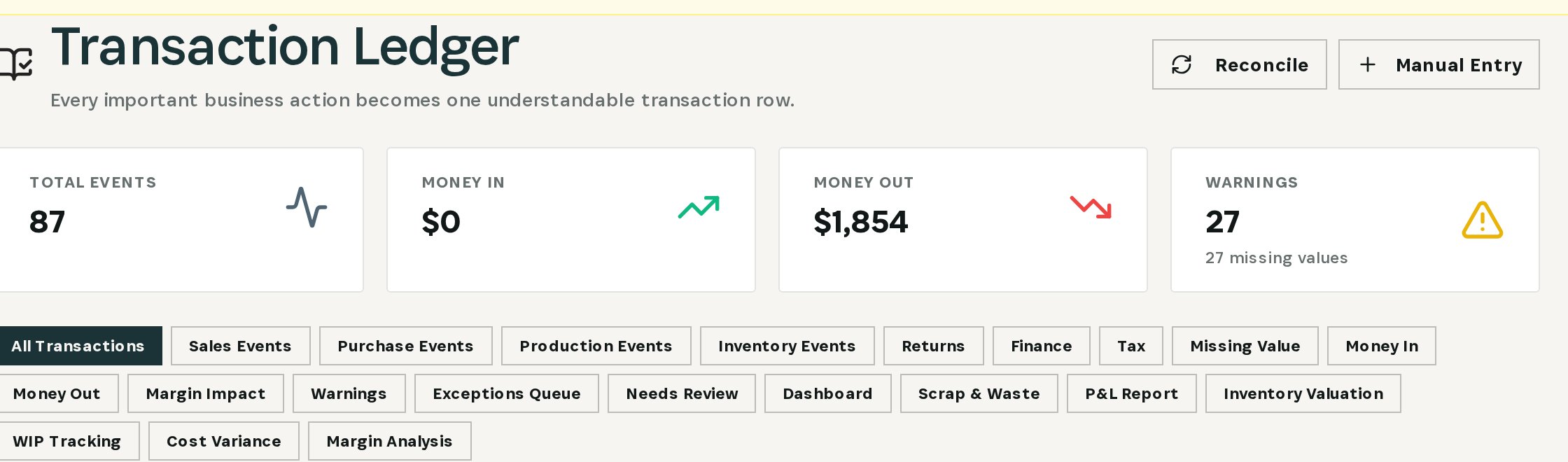
    See the warnings
  2. 02

    Open the Missing Value view

    Every event booked without a cost, with the item, the type of movement and the status Needs cost data.
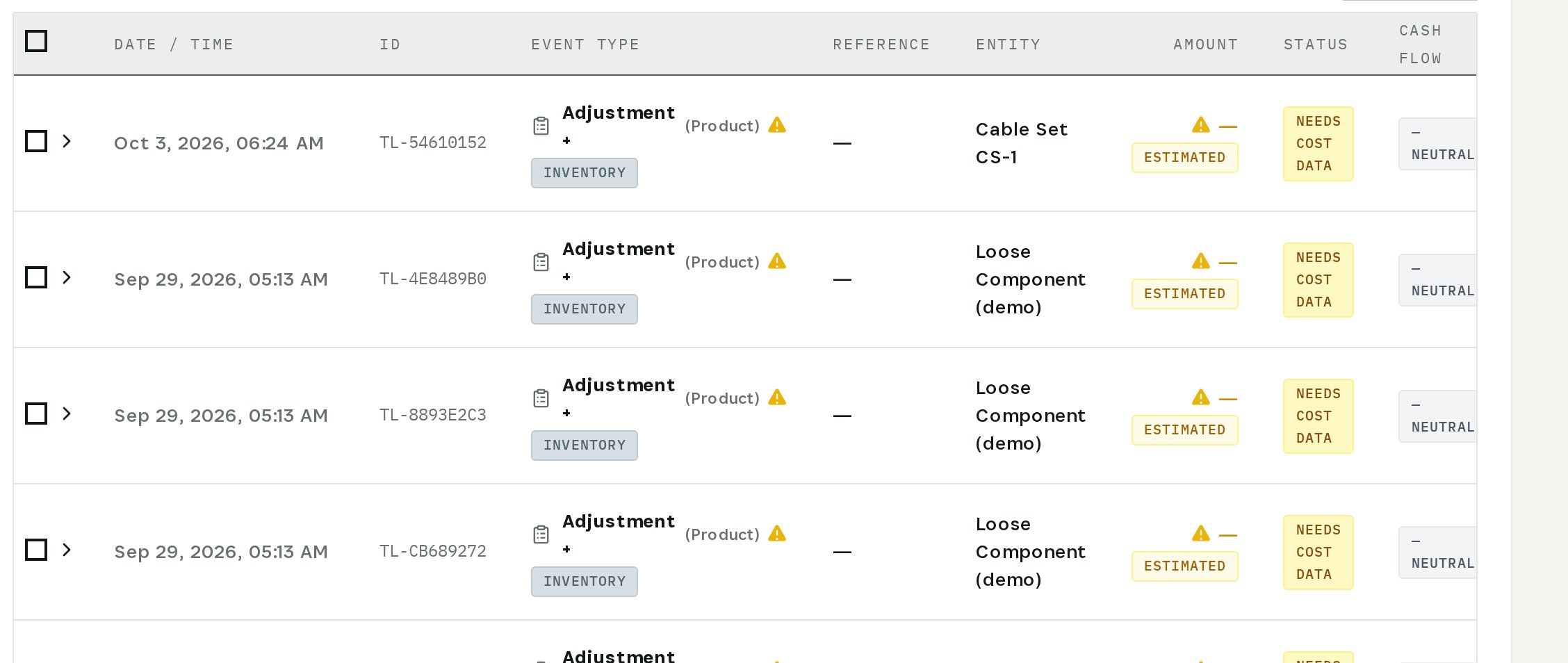
    Open the Missing Value view
  3. 03

    Open one entry

    A stock-out of eight units at $0.00 — no cost of goods, no journal amount — and the explanation of what to set.
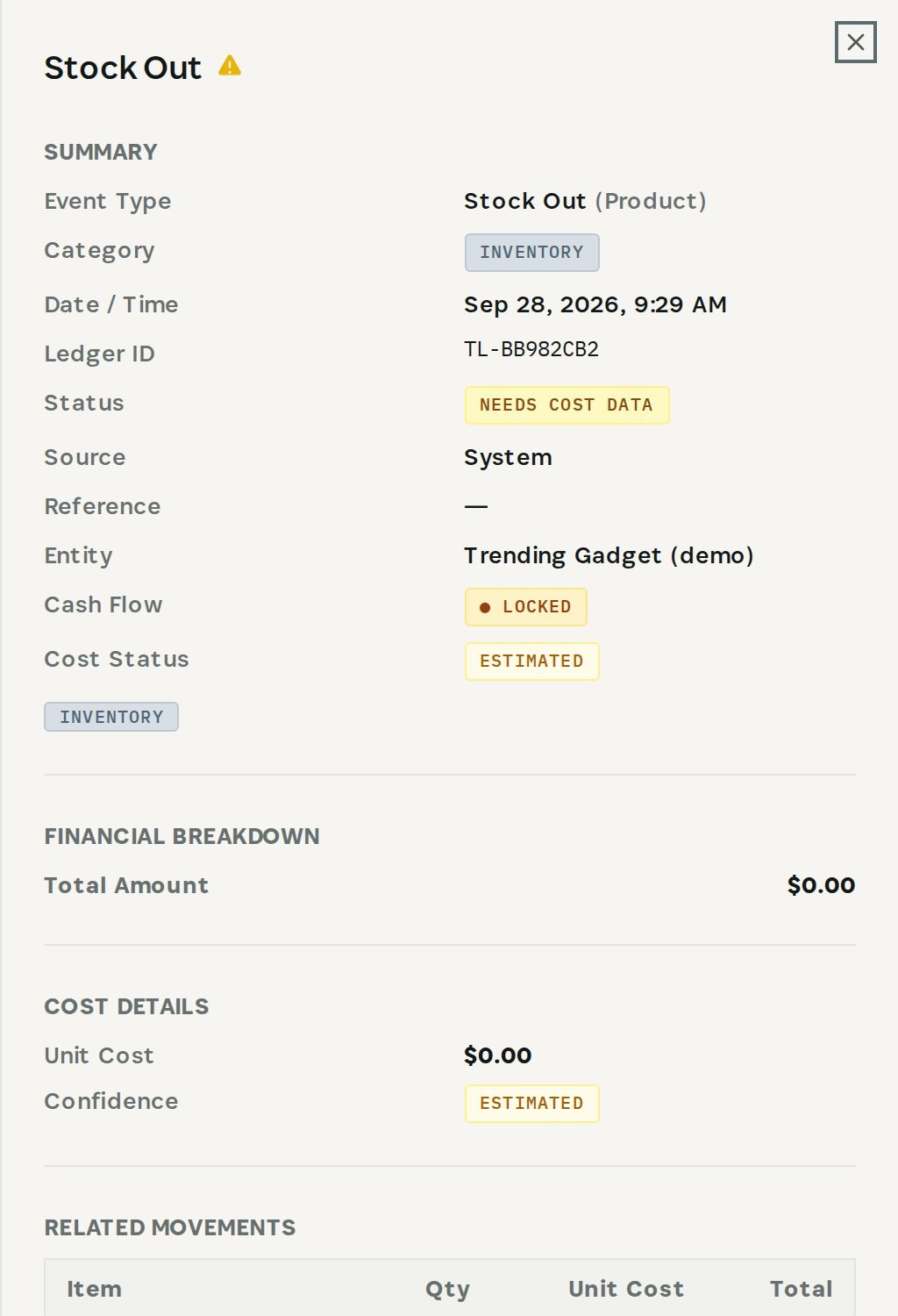
    Open one entry
  4. 04

    Rebuild its economics

    With the cost price in place, the entry is recomputed: $30 per unit, $240 cost of goods, and a journal entry of loss against inventory.
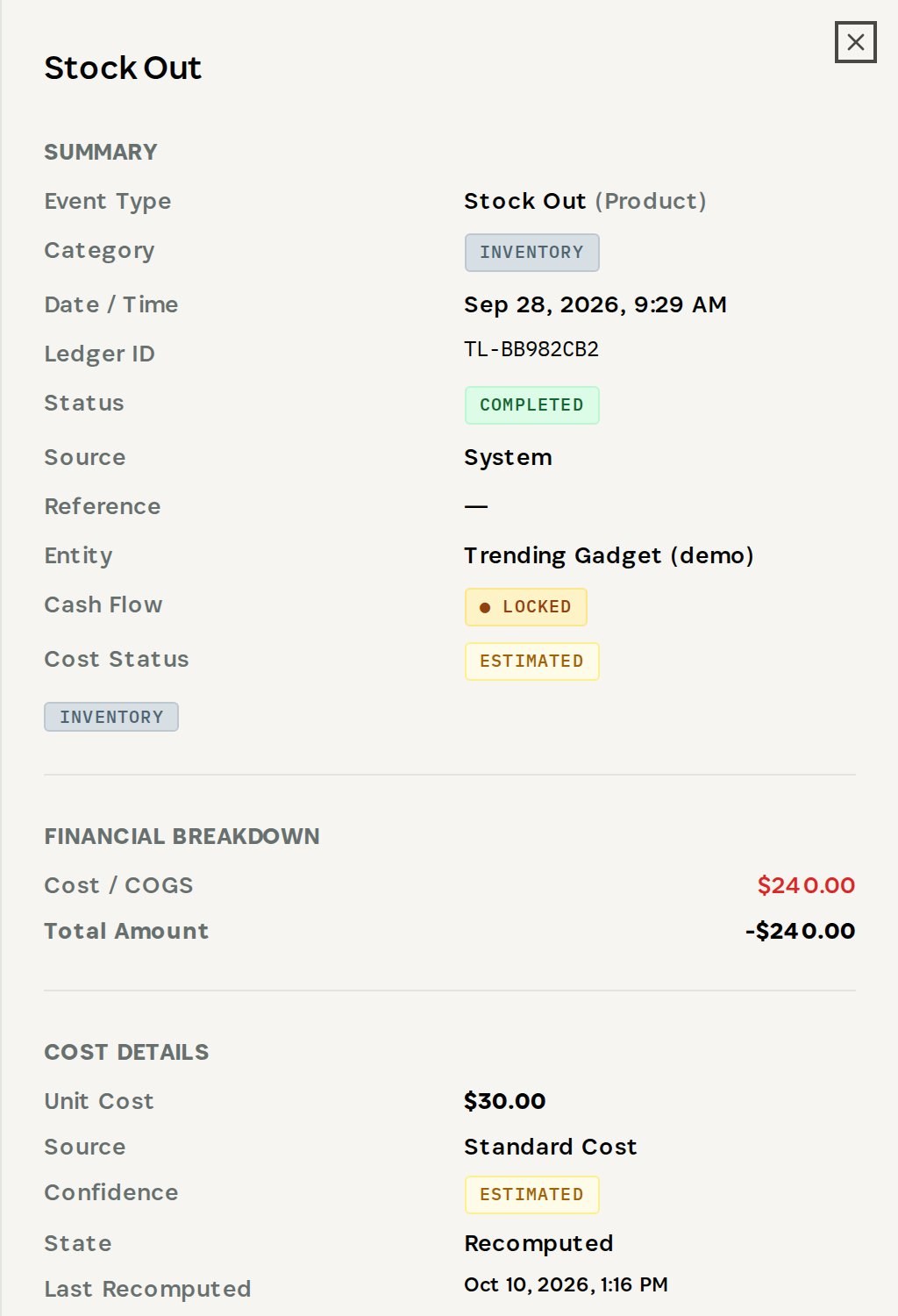
    Rebuild its economics
03

Cómo Funciona

Funciones diseñadas específicamente para resolver estos problemas exactos.
01

Every event, costed or flagged

The Transaction Ledger records each stock movement, sale and build. One that has no cost is marked Needs cost data instead of passing silently.
02

Warnings at the top

The ledger summary counts missing values; a dedicated Missing Value view lists them all.
03

Why it's missing

Each entry explains what cost it looked for and where to set it — the product's cost price, a purchase receipt or a lot cost.
04

Rebuild Event Economics

Once the cost exists, one click recalculates the entry: unit cost, cost of goods, amount and the suggested journal entry.
05

Audit trail

The recomputed entry shows its cost source, when it was recomputed and its confidence, and the change is logged.
04

Lo Que Ganarás

Mejoras tangibles que impactan tu línea de fondo.
  1. 01
    COGS you can sign

    No movement hides at zero cost.

  2. 02
    Margins that are real

    Gross margin reflects what the goods actually cost.

  3. 03
    Inventory value that matches

    Valuation and the books stay in step.

  4. 04
    Fixed at the source

    The event itself is recalculated — no manual journal to explain later.

05

Escenarios Reales

Ve cómo funciona esto en la práctica.
Escenario 1

Warnings nobody asked for

The demo ledger shows dozens of events missing a value — stock out, adjustments and receipts booked at nothing.
Escenario 2

Eight units out, at nothing

A stock-out of a trending product booked at zero cost: the cost of goods for those units simply wasn't there.
Escenario 3

Costed in one click

With the product's cost set, Rebuild Event Economics books the movement at its real cost and drafts the matching journal entry.
06

La Transformación

Del caos a la claridad.
Antes
  • Movements booked at zero
  • COGS too low, margin too high
  • Valuation drifts from the books
  • Found at year-end, by hand
Después
  • Every uncosted event flagged
  • Cause explained, source named
  • Recomputed in one click
  • Journal entry suggested with the real cost
07

Preguntas Frecuentes

Respuestas rápidas a preguntas comunes.
01Why would a movement have no cost?
Usually because the product or material had no cost price when it moved, the receipt it came in on wasn't priced, or the lot carries no cost. The entry says which sources it checked.
02Where does the recomputed cost come from?
In order: the lot or receipt behind the movement, the item's weighted average cost, its most recent lot cost, then its standard cost price. The entry shows which one was used and how confident it is.
03Does Otiox change completed, locked entries?
No. Completed entries are protected and corrected through the reversal workflow. Rebuild applies to entries still flagged as needing cost data.
04What happens to the journal?
The entry's suggested journal — cost of goods or loss against inventory — is rebuilt with the real amount, ready to post.
Missing Cost

¿Listo para transformar tu missing cost?

Descubre cómo Otiox puede resolver tus desafíos específicos.