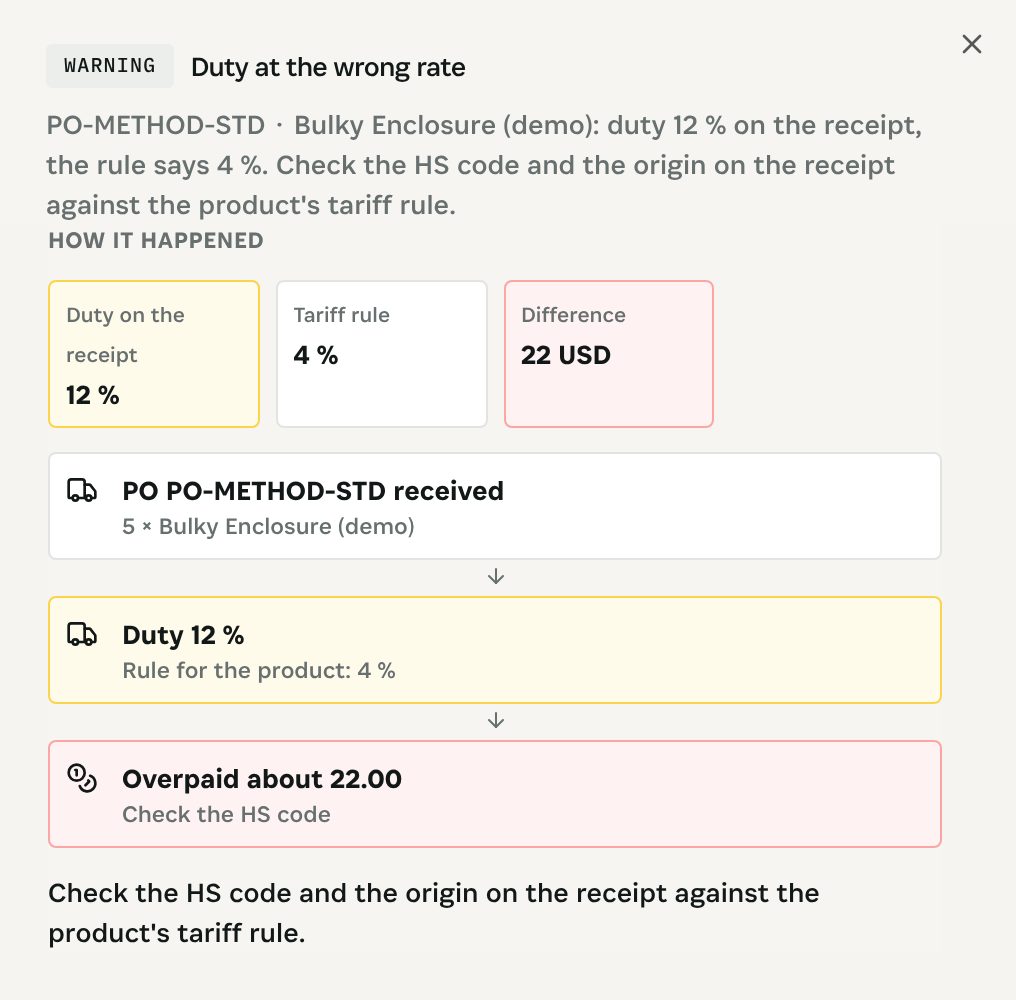
The rule says 4 % duty. The receipt says 12.
Check the HS code and origin on the receipt against the rule.
Receipts are booked at the rule's rate.
Too much duty is cost. Too little is a risk.
- 01HS codes and origins are typed by hand
- 02Rates change and receipts keep the old one
- 03Overpaid duty sits in product cost
- 04Underpaid duty is a compliance risk
The same situation, in the product.
- 01
The finding, and how it happened
The Integrity Engine's finding names the record and what to do, and its cascade shows how it reached the money. Check the HS code and origin on the receipt against the tariff rule.
- 02
On, shadow or off
The scenario's row on the Scenario switches page: how many findings are open, and its switch. It is on from the start; shadow keeps it counting without raising findings.

How It Works
What you see
What you do next
The money
In both engines' views
On from the start
What You'll Gain
- 01Duty as the rule says
Every receipt compared with the product's tariff rule.
- 02Both directions
Too much is cost; too little is flagged with high severity.
- 03Counted with every other loss
Margin findings feed the Loss Prevention Report next to the other engine findings.
- 04Nothing changes by itself
No scenario changes a price, a discount or an order. You decide.
Real-World Scenarios
Wrong rate
Flagged
Fixed
The Transformation
- Duty rates typed by hand
- Old rates kept
- Overpaid duty in cost
- Underpaid duty unnoticed
- Rate checked against the rule
- Difference in money
- HS code and origin fixed
- Under-declared duty flagged high
Frequently Asked Questions
01Which rule is used?
02Why is a lower rate more severe?
03Who sees the numbers?
04Does Otiox change prices or orders?
05Can I put it in shadow or switch it off?
06Which currency are the amounts in?
Related margin scenarios
Tariff Change Ahead
Freight and Duty Eat the Margin
Below Target Margin
All margin erosion scenarios
Integrity Engine
Finance
Ready to transform your duty at the wrong rate?
See how Otiox can solve your specific challenges.