Year-End Stock Value

Year-end stock value, as it really was on that day.

The stock count is done in January, but the auditor wants the value on the last day of December. Otiox shows every item's quantity on any recorded date, and values stock from FIFO cost layers as of that date — next to the inventory accounts in the ledger, so differences are explained, not discovered.
app.otiox.comFig. 00
Accounting · valuation
Stock as of the year end
Quantities and FIFO value on a date
MeasureAs ofNote
Stock valueFIFO layersThat day's costs
Inventory accountsLedgerSame date
DifferenceExplainedShadow items
Agreed with the books
Value

Pick the date, read quantities and value.

Year end without a recount.

01The Challenge

The auditor wants December. It's already January.

Stock moved since year end. The value is rebuilt from counts, receipts and guesses, and the figure in the balance sheet never quite matches the warehouse.
  1. 01
    Year-end stock rebuilt after the fact
  2. 02
    Value from today's costs, not that day's
  3. 03
    Ledger and stock disagree
  4. 04
    Differences found by the auditor
02SEE IT IN OTIOX

The same situation, in the product.

Real screens from the Otiox demo workspace, step by step.
  1. 01

    Stock on the date

    Every material's quantity then and now.
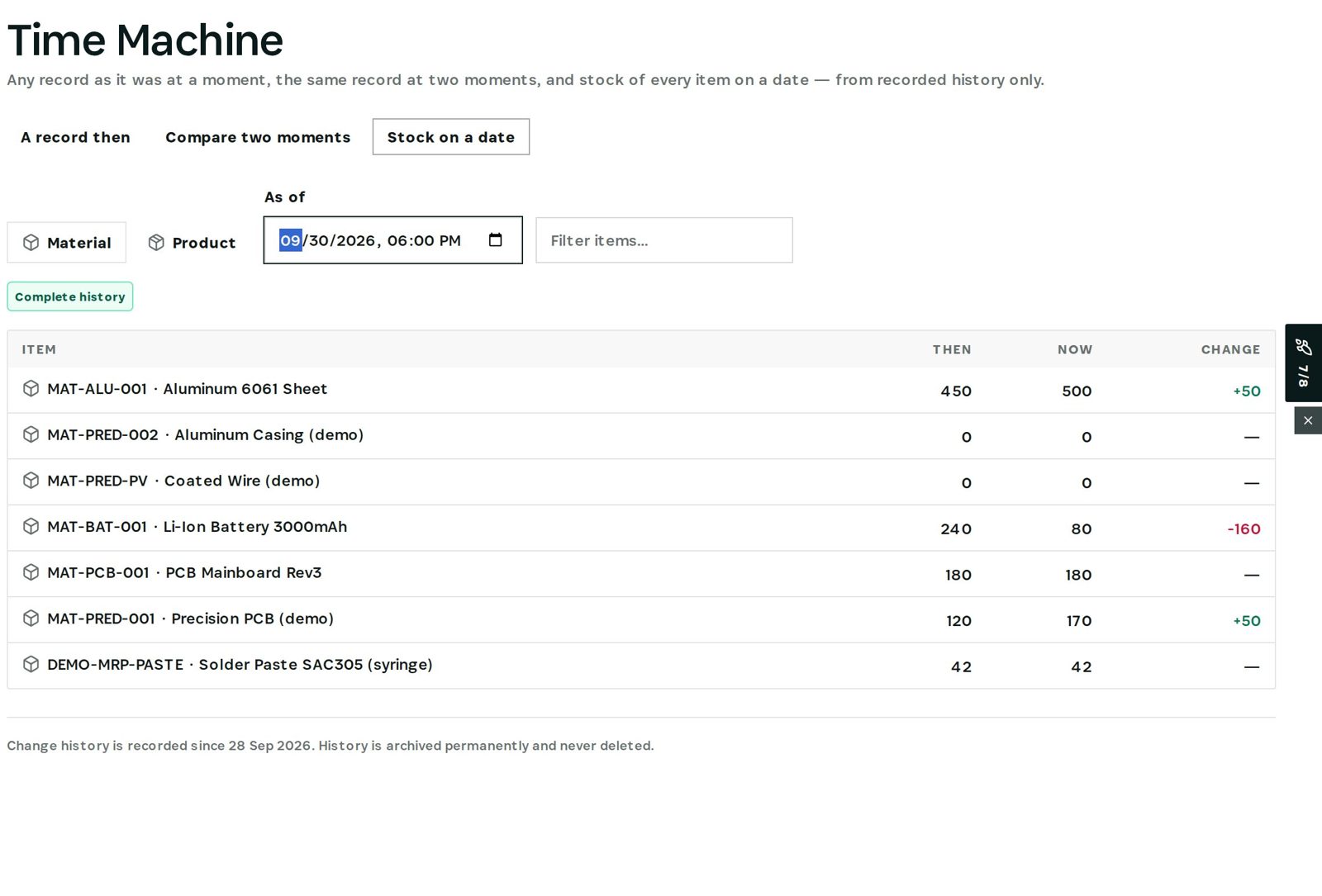
    Stock on the date
  2. 02

    Value on the date

    FIFO stock value next to the inventory accounts and the difference.
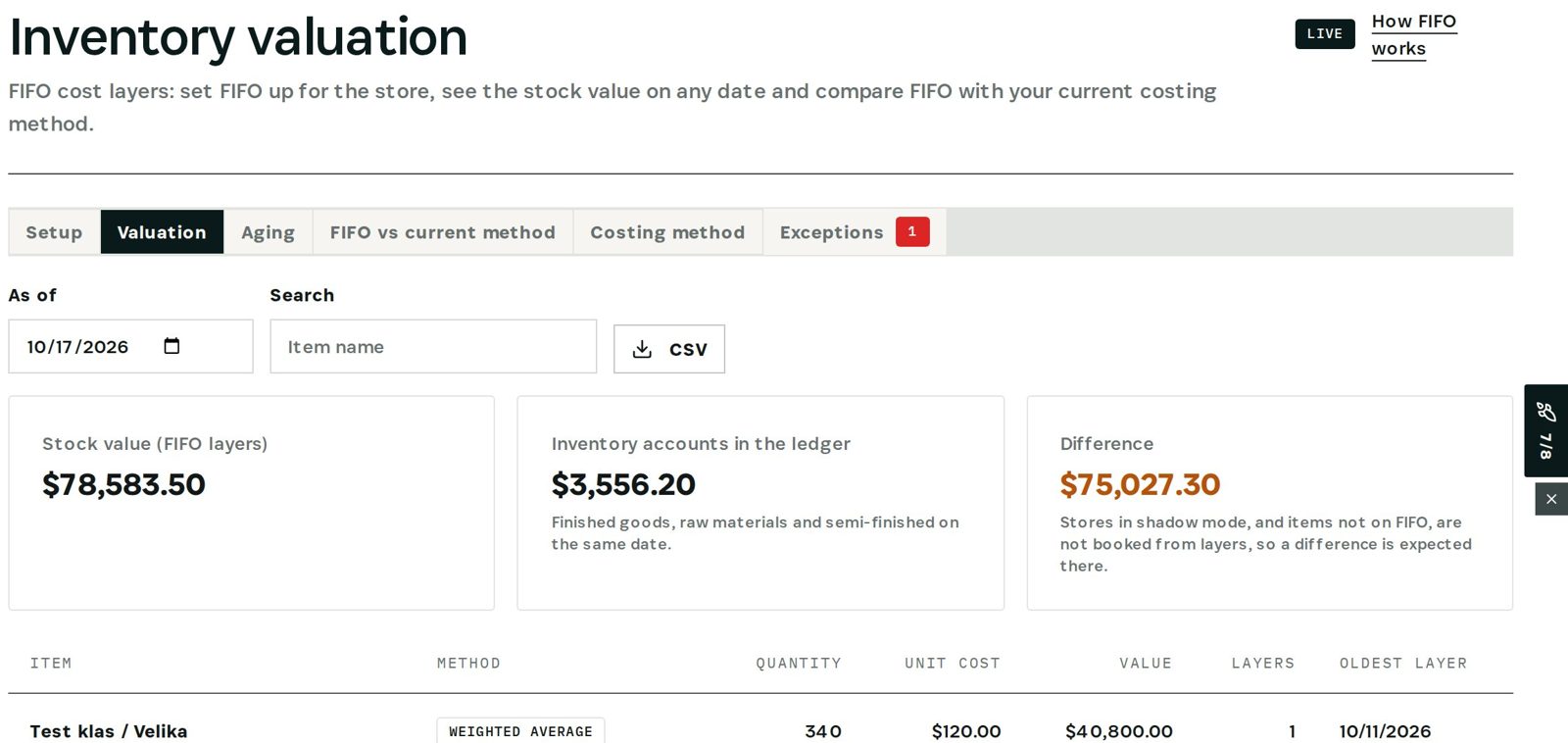
    Value on the date
03

How It Works

Purpose-built features that solve these exact problems.
01

Stock on a date

Every item's quantity on a recorded date, today, and the change in between.
02

FIFO value as of a date

Stock valued from the cost layers that existed that day.
03

Ledger side by side

The inventory accounts on the same date and the difference.
04

Explained differences

Stores in shadow mode and items not on FIFO are named.
04

What You'll Gain

Tangible improvements that impact your bottom line.
  1. 01
    Year end without a recount

    Quantities taken from history.

  2. 02
    The right cost

    That day's layers, not today's prices.

  3. 03
    Agreed with the books

    Differences shown and explained.

  4. 04
    Faster audit

    One date, one view.

05

Real-World Scenarios

See how this works in practice.
Scenario 1

Balance-sheet stock

Raw materials and finished goods on the last day of the year.
Scenario 2

Mid-year check

Value on the last day of a quarter.
Scenario 3

Shadow period

Comparing FIFO with the current costing method before switching.
06

The Transformation

From chaos to clarity.
Before
  • Rebuilt from counts
  • Today's costs
  • Books and stock disagree
  • Auditor finds the gap
After
  • Quantities from history
  • That day's cost layers
  • Ledger side by side
  • Differences explained
07

Frequently Asked Questions

Quick answers to common questions.
01How far back can I look?
From the day history recording started; history is archived permanently.
02Which costing method?
FIFO cost layers where FIFO is live; other items show their method.
03Why might stock value and ledger differ?
Stores in shadow mode and items not on FIFO are not booked from layers; the page says so.
04Can I export it?
Yes — the valuation exports as CSV.
Year-End Stock Value

Ready to transform your year-end stock value?

See how Otiox can solve your specific challenges.