Playbook: supplier bills fall due before customers pay
The situation
October is heavy. Battery cells from ElectroParts KR, electronics from Shenzhen Precision and parts from Baltic Components all fall due within weeks — and one Shenzhen bill is already overdue. On the other side, Falcon Robotics owes you more than half of your receivables and is past due.
This playbook answers three questions, in this order:
- What do we owe, to whom, and when?
- How big is the gap between what falls due and what comes in?
- Who are we waiting for?
The screenshots come from the Otiox demo workspace. To follow along, choose Switch to demo in the sidebar — changes there never touch your live data.
Step 1 — See every bill by due date
Go to Finance → Accounting → Payables. The top of the page shows what is due today, due in 7 days, overdue and the total unpaid. Below it, every supplier bill is listed with its amount, document date, due date, paid amount and status.
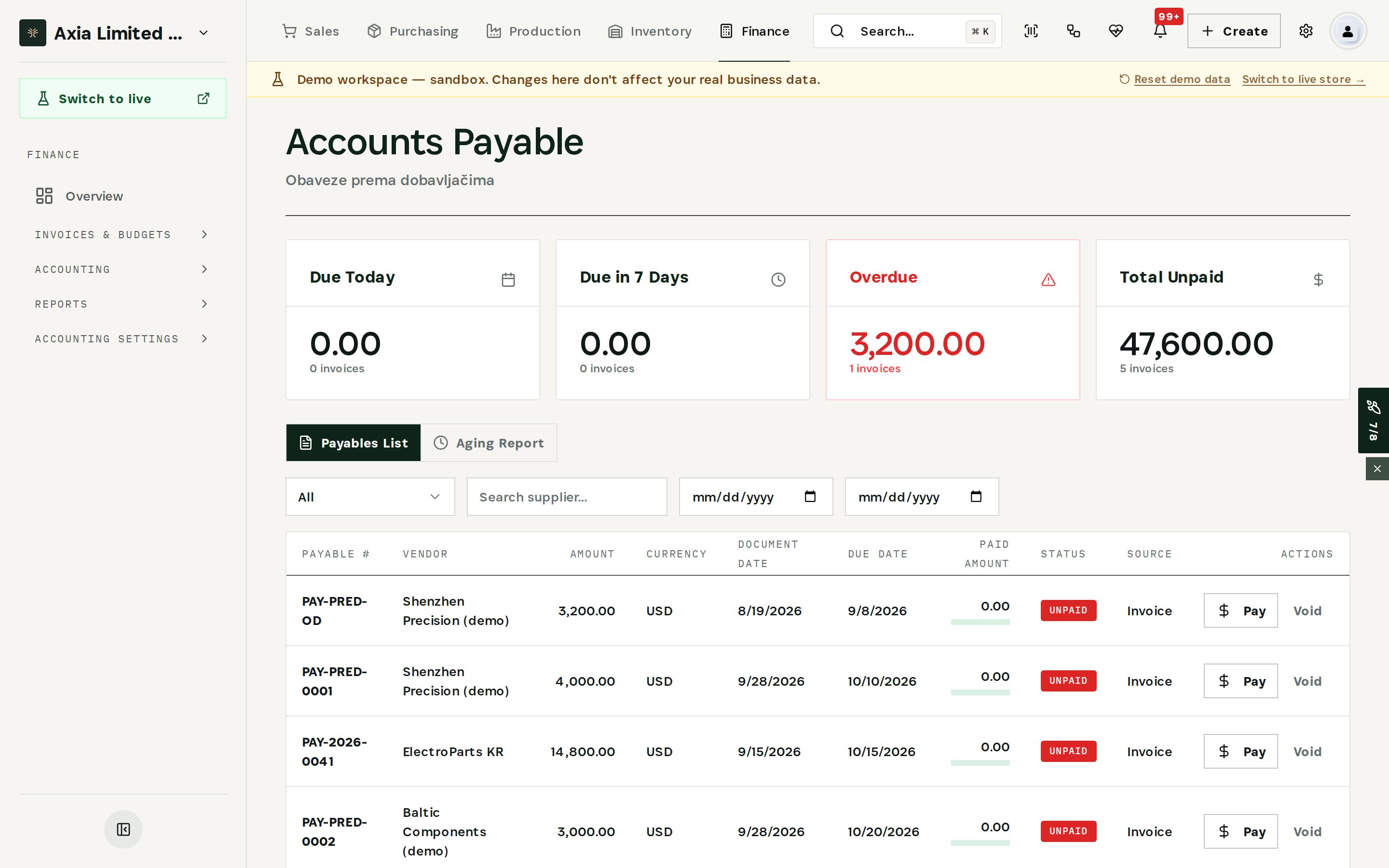
In the demo, $47,600 is unpaid across five bills, and $3,200 is already overdue.
Step 2 — Read the aging by vendor
Open Aging Report. Payables are grouped by vendor into current, 1–30, 31–60, 61–90 and 90+ days.
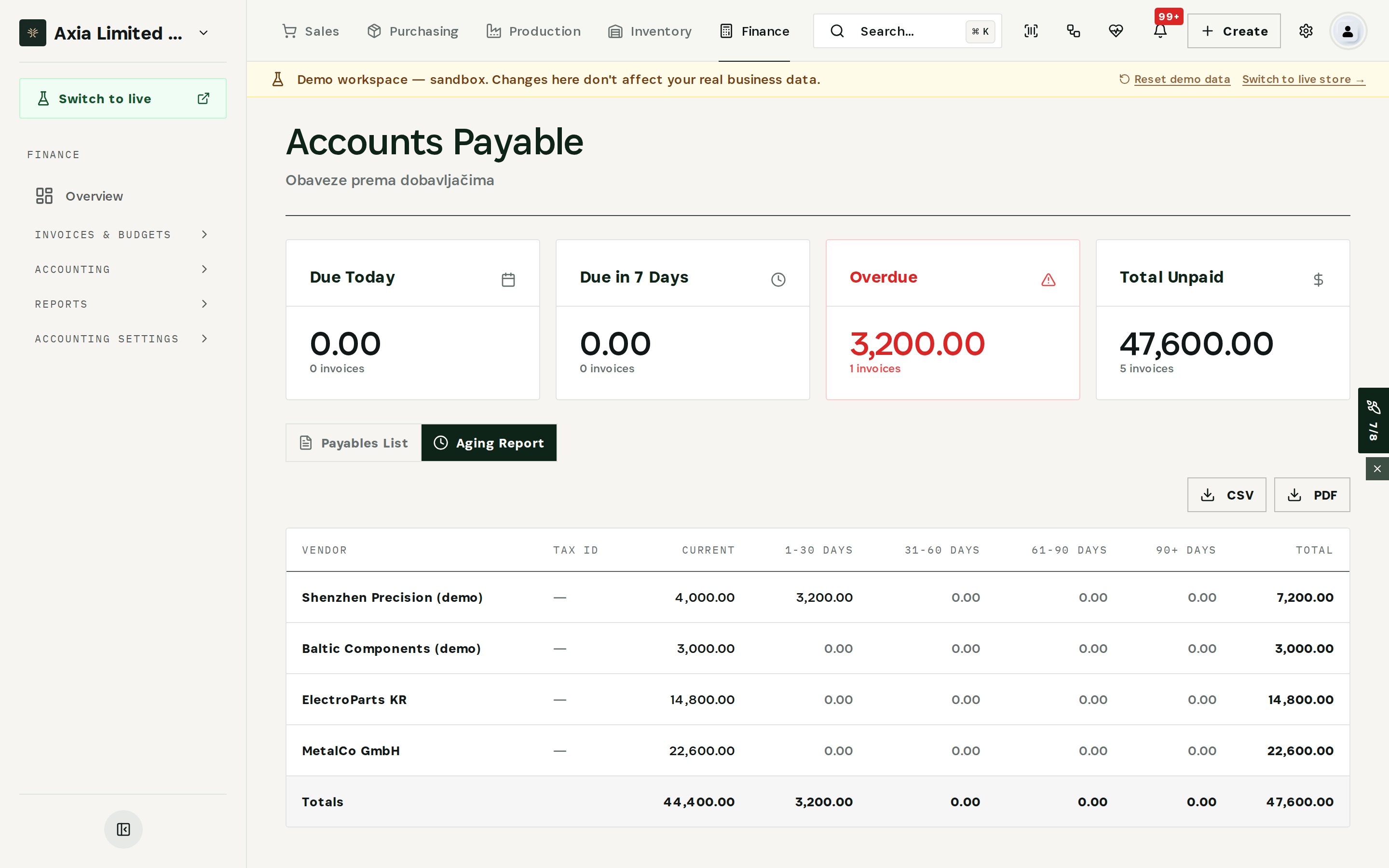
The overdue $3,200 belongs to Shenzhen Precision, the supplier of your PCBs. Export the report to CSV or PDF if finance needs it outside Otiox.
Step 3 — Pay the overdue supplier first
Back on Payables List, choose Pay on the overdue bill. Enter the amount — all of it, or part — the payment date and a note.
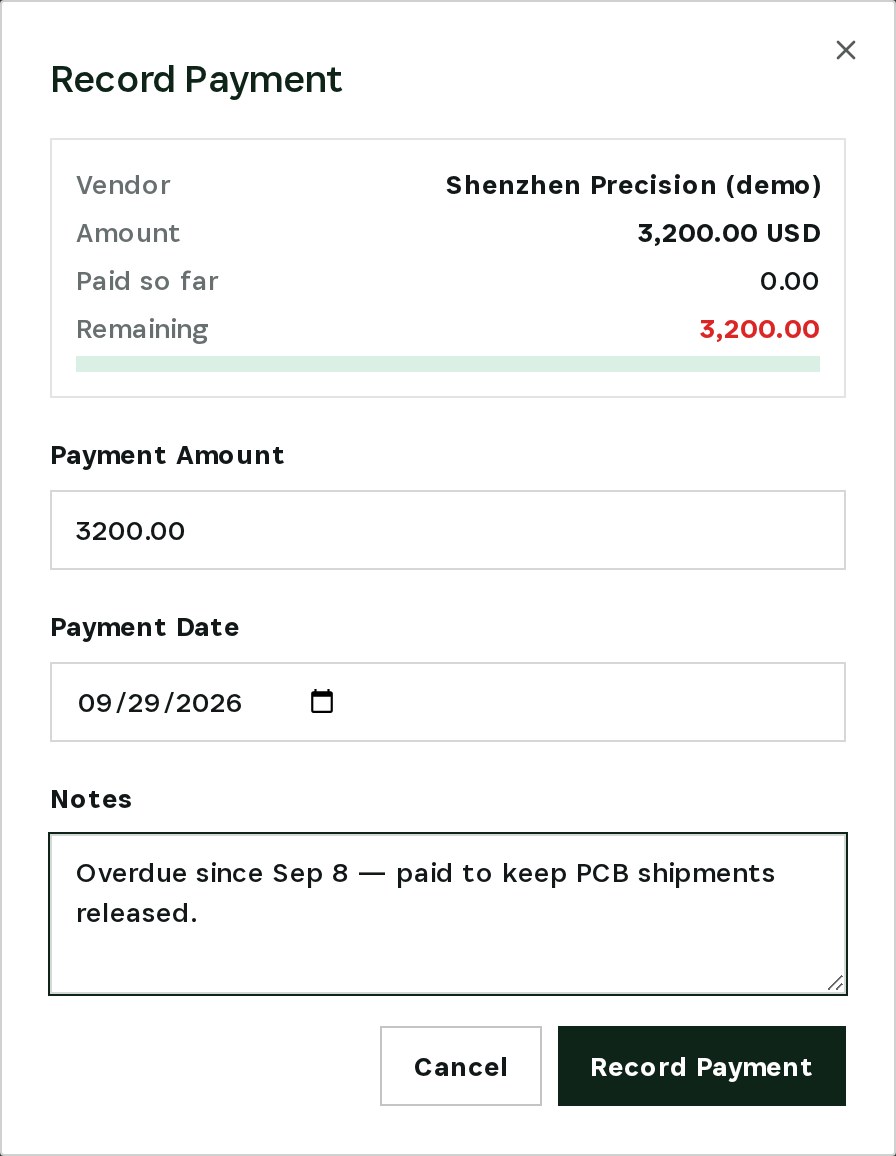
The payable's paid amount and status update, and it leaves the overdue total.
Step 4 — Check the 30-day gap
Open Predictive Insights, choose Run prediction scan and filter by Cash-flow shortfall.
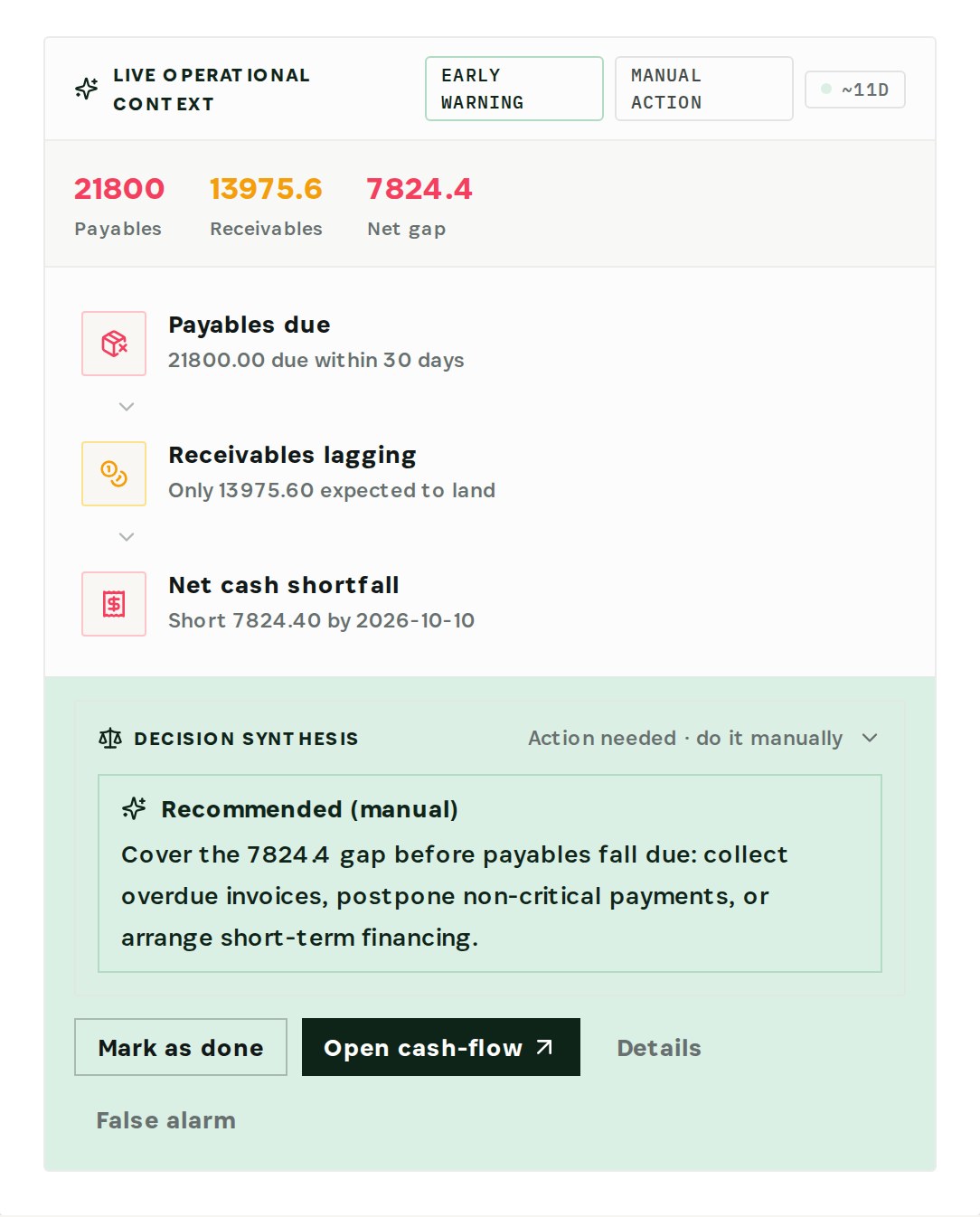
The engine adds up the payables due in the next 30 days — $21,800 — and the receivables expected in the same window, including overdue invoices — $13,976. The result is a $7,824 shortfall by October 10, the date of the first bill that can't be covered. Decision Synthesis lists the options: collect overdue invoices, postpone non-critical payments, or arrange short-term financing.
The warning uses payables and receivables, not your bank balance. It tells you how far apart the two are, and from when.
Step 5 — Find who you are waiting for
Filter by AR concentration → cash single point of failure.
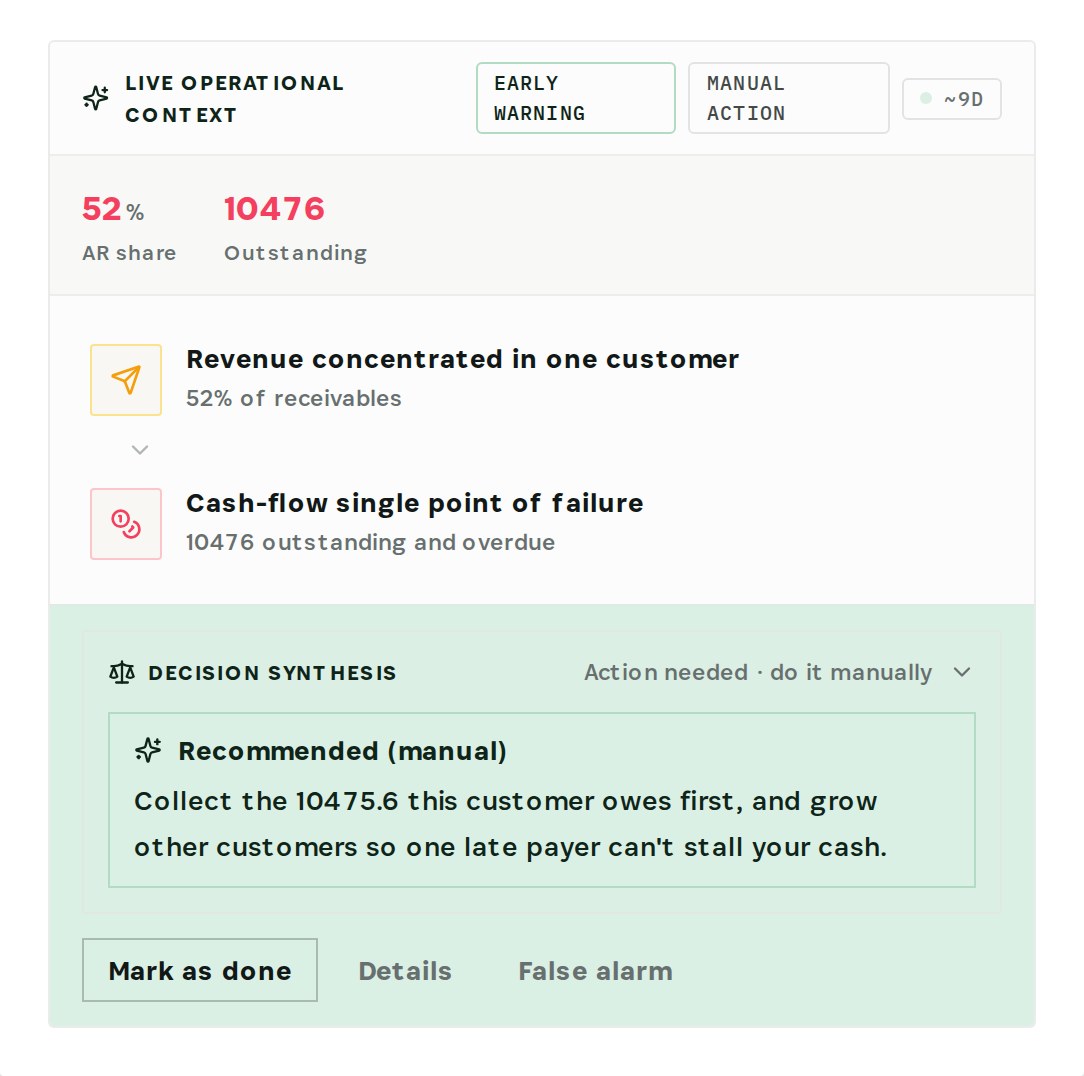
Falcon Robotics owes $10,476 — 52% of all receivables — and is past due. Collecting it covers most of the gap. Mark the finding as done once the collection call is made, so the team knows it is handled.
What you have at the end
- Every supplier bill in one list, by due date and by vendor.
- The overdue supplier paid before shipments stop.
- The gap between payables and receivables as an amount and a date.
- The customer you depend on most, identified — and called.
Related
- Use case: Cash Squeeze — /use-cases/cash-squeeze
- Accounts Payable and the Predictive Engine are part of the Otiox platform.